
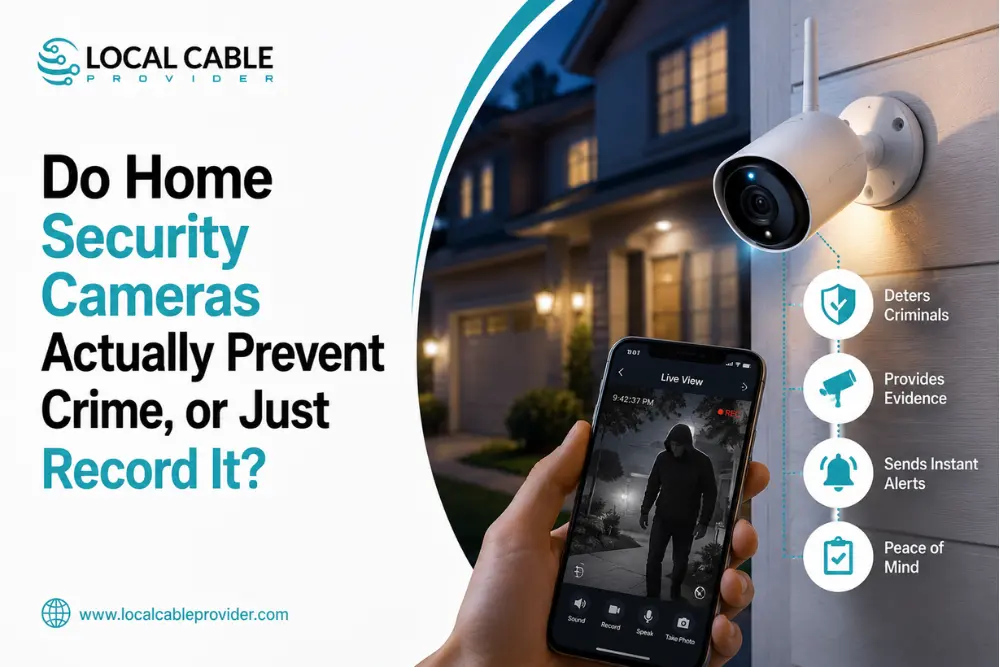
Home security cameras can help prevent crime, but they are not a force field. Their ability to deter someone depends on whether the camera is visible, whether the person believes it is active, and whether the system can trigger a quick response. When those conditions are missing, a camera may do little more than document what already happened.
The most honest answer is that cameras work best as one part of a complete home security plan. Strong locks, good lighting, entry sensors, an alarm, useful alerts, and professional monitoring can turn a passive recording device into an active layer of protection.
Quick Answer
| Question | Practical Finding |
| Can cameras deter burglars? | Yes, visible security can make a home less attractive, but deterrence is not guaranteed |
| Do cameras reduce crime by themselves? | Research suggests a modest effect, with better results when cameras support other security measures |
| What is their strongest benefit? | Real time awareness, evidence, and the ability to respond while an event is happening |
| What is their biggest weakness? | A camera cannot physically stop an intruder or guarantee police intervention |
| Where should cameras be placed? | Main entrances, driveway, garage, side access, and other realistic approach routes |
| Best overall setup | Visible cameras combined with lighting, locks, sensors, alarms, and monitoring |
What the Research Actually Shows
A 40 year systematic review listed by the Office of Justice Programs found a significant but modest reduction in crime, including evidence of reductions in residential settings. Actively monitored systems produced stronger effects than passive cameras, and results improved when other security measures were also present.
A UNC Charlotte study of 422 convicted burglars found that offenders considered visible signs of security when selecting targets, including alarms, dogs, outdoor cameras, and other surveillance equipment. In the same study, 83 percent said they would check for an alarm, while 60 percent said they would choose another target if one was present.
Those percentages refer to alarms, not cameras alone. Most CCTV research also examines public or managed systems rather than one camera on one house. The evidence supports cameras as a useful layer, not a guaranteed solution.
How Security Cameras Can Help Prevent Crime
1. They Increase the Perceived Risk of Being Identified
A visible camera suggests that faces, clothing, vehicles, and movement may be recorded. It can make a property appear riskier than one without visible security.
2. Smart Alerts Make a Faster Response Possible
Modern cameras can notify the homeowner when a person enters a selected area. Turning on a light, speaking through the camera, or sounding a siren shows that someone is watching. Silent footage checked hours later cannot interrupt the event.
3. Cameras Improve Awareness Around Vulnerable Areas
Driveways, garages, side gates, rear doors, and ground level windows may offer quieter access. Proper coverage can reveal suspicious activity before entry is attempted.
4. Recorded Video Can Support an Investigation
Clear footage may show a face, vehicle, direction of travel, time, or sequence of events. It can support a police report or insurance claim, although it cannot guarantee identification or recovery.
When a Camera Mostly Records the Crime
The Camera Is Hidden or Easy to Miss
A concealed camera may capture evidence, but it cannot deter someone who never sees it. Keep some outdoor cameras visible but difficult to reach.
Nobody Responds to the Alert
Notifications only help when someone receives and acts on them. Detection zones and person recognition can reduce false alerts that homeowners might start ignoring.
Important Areas Are Outside the View
A doorbell camera can cover the porch while missing the driveway, garage, side gate, or rear entrance. One view rarely protects an entire detached home.
The Image Is Too Poor to Be Useful
Glare, darkness, a dirty lens, weak WiFi, or a poor angle can hide important detail. Test whether people and vehicles remain clear at likely entry points.
The Camera Loses Power or Internet Access
Power, router, or internet failures can interrupt cloud recording and alerts. Local storage, backup power, and reliable WiFi can improve resilience when supported.
Cameras Versus a Complete Security System
| Security Layer | Main Purpose |
| Visible cameras | Deterrence, awareness, and video evidence |
| Door and window sensors | Detect an entry attempt immediately |
| Strong locks | Make physical entry more difficult |
| Motion lighting | Remove dark approach areas and draw attention |
| Audible alarm | Signal that entry has been detected |
| Professional monitoring | Provide a response path when the homeowner is unavailable |
The strongest setup creates several obstacles while increasing detection and response. Explore smart home security options that combine cameras, sensors, monitoring, and connected controls.
How to Make Home Security Cameras More Effective
Make Key Cameras Visible
Place outdoor cameras where visitors can notice them but cannot easily reach them. A legitimate sign can reinforce the message but should not replace working equipment.
Cover Routes, Not Just Doors
Cover the main door, driveway, garage, side passage, and rear access where practical. Do not leave one easy route unprotected.
Use Lighting and Activity Zones
Motion lighting improves visibility. Activity zones can focus alerts on the porch, gate, or driveway instead of passing street traffic.
Turn On Useful Alerts
Enable person detection and tampering alerts, then test notification speed. If several people share access, decide who should respond.
Combine Cameras With Entry Protection
Use strong locks, entry sensors, an audible alarm, and professional monitoring where appropriate. Cameras are more effective within layered security.
Secure the Cameras Themselves
The Federal Trade Commission recommends encrypted cameras, unique passwords, two factor authentication, software updates, and a secure home router. Never keep default credentials.
Test the System Regularly
Test every view during daylight and at night. Check image detail, alerts, storage, battery level, and timestamps. A camera may look active despite a dead battery, blocked lens, or expired plan.
What to Look for When Choosing a Camera
Consider night performance, person detection, notification speed, viewing angle, storage, weather resistance, backup power, account security, and continued software support. Resolution alone does not guarantee useful footage.
Check whether recording, longer storage, or advanced alerts require a monthly plan. A low purchase price can hide ongoing costs.
Aim cameras toward your own property, limit access to live feeds, and review local rules before enabling audio recording.
Frequently Asked Questions
Do visible security cameras scare burglars away?
They can. Research suggests that offenders notice security measures when evaluating a target. A visible camera is more convincing when paired with lighting, locks, sensors, and an alarm.
Is a doorbell camera enough for home security?
It can protect the main entrance and help with package activity, but it may not cover the driveway, garage, side gate, rear door, or windows. Larger properties usually need more than one view.
Are hidden or visible cameras better?
Visible cameras are generally better for deterrence. Hidden cameras may preserve evidence if a visible device is damaged, but they cannot discourage someone who does not know they exist.
Does professional monitoring make cameras more effective?
Monitoring can provide a response option when you are asleep, away, or unable to check an alert. The exact response depends on the provider, plan, event verification, and local emergency procedures.
Do security cameras work when the internet is down?
It depends on the camera. Some models can continue recording locally but may lose remote viewing and phone alerts. Others depend more heavily on cloud connectivity. Check the product before buying.
Can security camera footage guarantee an arrest?
No. Footage may support an investigation, but identification depends on image quality, available details, police evidence, and other circumstances.
The Bottom Line
Home security cameras can do more than record crime. A visible, reliable, and actively monitored camera can make a property less attractive and allow a homeowner to respond sooner. The evidence suggests that cameras can contribute to crime reduction, especially when they are paired with other protective measures.
The limitation is equally important: a camera cannot physically stop an intruder, guarantee identification, or replace strong locks, sensors, lighting, and a response plan. Treat cameras as one layer of security, not the entire solution.
Call Local Cable Provider at (409) 273-7460 to compare smart home security cameras, sensors, professional monitoring, and connected security options available for your home.